• Log In

RERC on AAC

  • Home
  • People
  • News
    • Future of AAC Research Summit – 2024
    • News
    • Presentations
    • Publications
    • Archives (2014-2020)
      • R1: Brain-computer interface
      • R2: Supporting transition to literacy
      • R3: Visual cognitive processing demands
      • D1: Multimodal technologies
      • D2: Interactive video visual scene displays
      • D3: Smart Predictor app
      • D4: Cognitive demands checklist
  • Research
    • R1: Video Visual Scene Display (VSD) Intervention
    • R2: AAC Literacy Decoding Technology
      • Design of the transition to literacy (T2L) decoding feature
    • R3: Motion to improve AAC user interface displays
    • Consumer & Technology Forums
      • Communication with Direct Support Professionals: The Experiences of AAC Users (2024)
      • The participation of people who rely on AAC in the pre-service preparation of communication, education, and medical professionals (2023)
      • The patient-provider experiences of people with CP who use AAC (2022)
  • Development
    • D1: Access Assistant Software to Improve Alternative Access Services
    • D2: Smart Select: a new switch access method
    • D3: mTraining in AAC for Communication Partners
  • Training
    • T1: Mentored Research and Lab Experiences
    • T2: Rehabilitation Engineering Student Capstone Projects
    • T3: Student Research and Design Challenges
    • T4: Doctoral Student AAC Research Think Tank
    • T5: Webcasts & Instructional Modules
  • eBlast & Dissemination
    • eBlast
    • Free ePrints
    • Presentations
    • Publications
  • Webcasts & Instructional Modules

ISAAC 2016

August 4, 2016 by David McNaughton

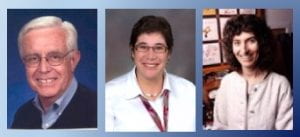
Beukelman, Fried-Oken, LIght
 
RERC on AAC partners David Beukelman, Melanie Fried-Oken, and Janice Light presented in Toronto, Canada, for ISAAC 2016, August 8 – 11, 2016.
 
Monday, August 8

• Designing AAC interventions and research to improve outcomes for individuals with complex communication needs
Janice Light, David McNaughton (handout as pdf)

Tuesday, August 9

• Evidence-based Literacy Intervention and Apps for Individuals Who Require AAC
Janice Light, David McNaughton, Jessica Gosnell Caron (handout as pdf)

Wednesday, August 10

• Designing effective AAC systems for young children with complex communication needs to support communication development
Janice Light (handout as pdf)

• Providing Communication Access for Patients: The Role of AAC Across Healthcare Settings
  Sarah Blackstone, David Beukelman, John Costello, Richard Hurtig, Lisa Bardach, Kathryn Yorkston (handout as pdf)

• Augmentative and Alternative Communication for Adults with Total Locked-In Syndrome
   Betts Peters, Brandon Eddy, Kendra McInturf, Melanie Fried-Oken (handout as pdf)

Thursday, August 11

• Research and Development Project Update of the Rehabilitation Engineering Research Center for AAC
Janice Light, Melanie Fried-Oken, David McNaughton, David Beukelman, Susan Fager, Tom Jakobs (handout as pdf)

• Challenges and opportunities in creating synergy between AAC and brain-computer interfaces
Melanie Fried-Oken, Hochberg Leigh, Jane Huggins, Mary Ann Romski, Theresa Vaughan (handout as pdf)

• Using Communication Supports to Enhance Communication Effectiveness of People with Severely Dysarthric Speech  (handout as pdf )
David Beukelman, Susan Fager

Filed Under: Presentation, Research, Student project

Subscribe

Subscribe to receive the eBlast  four times per year

Recent Posts

  • The first word in accessibility is “access” (Regan, 2025)
  • Alternative ways to access AAC technologies (Ramirez, 2025)
  • Future of AAC technologies: priorities for inclusive innovation (Williams & Holyfield, 2025)
  • Nothing about AAC users without AAC users: a call for meaningful inclusion in research, technology development, and professional training (Blasko et al., 2025)
  • To include us in our own worlds: AAC is not optional (Koloni, 2025)

Recent Publications and Presentation

Patrick Regan and a quote from his article in the AAC journal

The first word in accessibility is “access” (Regan, 2025)

Patrick Regan (2025) is President-Elect of USSAAC, and he also plays leadership roles in ISAAC, and in outreach programs for the Bridge School. Patrick experiences Spinal Muscular Atrophy, and has used a wide variety of AAC to communicate. In this paper, he describes “access challenges that I have experienced as someone who uses AAC, how my team and I have resolved them, and what challenges I face now.”

Now free at the AAC journal
https://doi.org/10.1080/07434618.2025.2513912

Other recent activity

Conferences

Recent

ASHA (2024) handouts and virtual posters

ATIA (2025) handouts

Upcoming

ASHA 2025


Follow the RERC on Facebook!

Follow the RERC on Facebook!

Copyright © 2026 · Enterprise Pro Theme on Genesis Framework · WordPress · Log in

The contents of this website were developed under a grant from the National Institute on Disability, Independent Living, and Rehabilitation Research (NIDILRR grant number 90REGE0014) to the Rehabilitation Engineering Research Center on Augmentative and Alternative Communication (RERC on AAC). NIDILRR is a Center within the Administration for Community Living (ACL), Department of Health and Human Services (HHS). The contents of this website do not necessarily represent the policy of NIDILRR, ACL, or HHS, and you should not assume endorsement by the Federal Government.